Understanding Fly Rod Guide Size Charts
Fly rod guide size charts are essential tools, standardizing dimensions within the tackle industry, ensuring compatibility and optimal performance for various rod weights and line types.
What is a Fly Rod Guide Size Chart?
A fly rod guide size chart is a reference table detailing the standardized measurements of fly rod guides, primarily developed by manufacturers like Fuji and REC. These charts correlate guide “feet” – a unit of measurement – with inner diameter (ID) and wire diameter.
Essentially, it’s a system for selecting the correct size guide for a specific rod weight and fly line. The chart isn’t simply about physical size; it’s about ensuring smooth line flow, minimizing friction, and maximizing casting distance and accuracy. Understanding these charts is crucial for rod builders and repair technicians, guaranteeing optimal performance and preventing line slap or tangling.
Why Guide Size Matters for Fly Fishing
Guide size profoundly impacts casting performance. Incorrectly sized guides create friction, reducing line speed and distance, and increasing line wear. Too-small guides can cause line slap – a noisy and energy-sapping issue. Conversely, oversized guides add unnecessary weight and can hinder accuracy.
Properly sized guides facilitate smooth line flow during the cast, translating into tighter loops, better presentation, and improved angler control. Selecting the right guide size, based on rod weight and line weight, optimizes the rod’s action and ensures efficient energy transfer. Ultimately, it enhances the overall fly fishing experience.
Fly Rod Guide Size Terminology
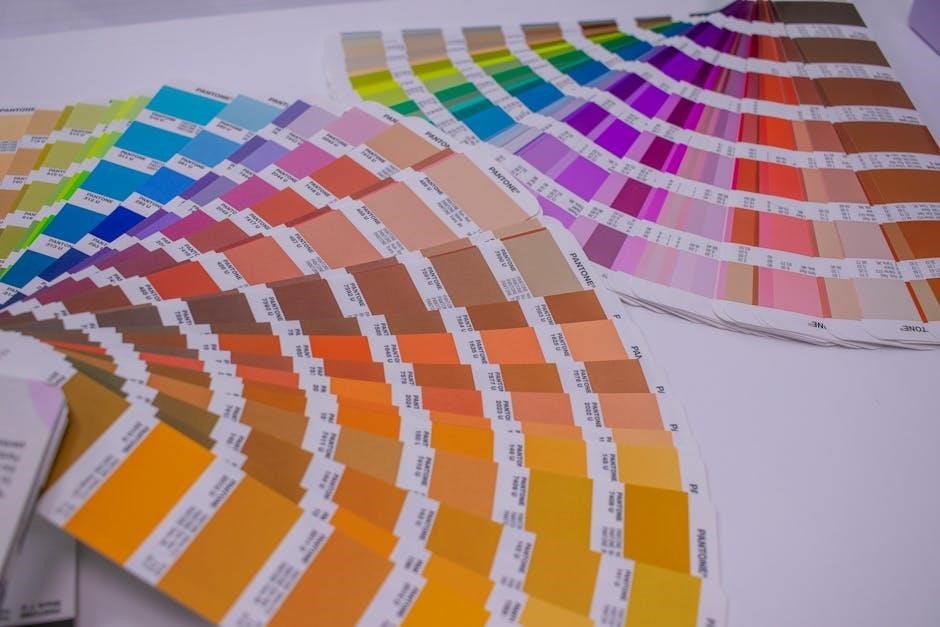
Key terms include inner diameter (ID), wire diameter, and “feet” – a standardized sizing system, notably Fuji, used to categorize guide frame dimensions.
Understanding Guide Feet (Fuji Guide System)
Fuji guide feet represent the width of the guide frame, measured in millimeters, and are a cornerstone of fly rod guide sizing. This system, widely adopted by manufacturers, provides a consistent benchmark for compatibility. Lower numbers indicate smaller frames, suitable for lighter line weights and delicate presentations. Conversely, higher numbers signify larger frames designed to handle heavier lines and more powerful casts.
Understanding these “feet” is crucial for replacements or custom builds. A chart correlates specific foot measurements to recommended rod weights and line sizes. Using the correct Fuji guide size ensures smooth line flow, minimizes friction, and maximizes casting efficiency, ultimately enhancing the overall fishing experience. Proper sizing prevents line slap and improves accuracy.
Wire Diameter and Inner Diameter (ID)
Wire diameter, measured in millimeters, defines the thickness of the guide’s wire loop, impacting its strength and durability. A larger diameter offers greater resilience, particularly for heavier lines and demanding conditions. Inner diameter (ID), also in millimeters, is the crucial measurement determining line passage. It must be appropriately sized to the fly line to prevent friction and ensure smooth casting.
The relationship between wire diameter and ID is vital. A wider wire with a smaller ID can create a bottleneck, hindering line flow. Conversely, a thin wire with a large ID may lack the strength to contain the line under stress. Charts specify optimal ID ranges for each wire diameter and line weight, guaranteeing performance.

Factors Influencing Guide Size Selection
Guide size selection hinges on rod weight, action, and the fly line used; these elements dictate the necessary inner diameter for efficient line management and casting.
Rod Weight and Line Weight
Rod weight and corresponding line weight are primary determinants in guide size selection. Lighter rods (0-2 weight) require smaller inner diameter guides to accommodate delicate lines, preventing unnecessary friction and maintaining sensitivity. Conversely, heavier rods (9-12 weight) necessitate larger guides to handle heavier lines and prevent line slap during powerful casts.
The relationship isn’t always linear; rod action also plays a role. A fast-action rod bends primarily in the tip, demanding guides that efficiently transfer energy, while a slower action rod distributes the bend along its length, potentially benefiting from slightly larger guides for smoother line flow. Matching guide size to both rod and line weight ensures optimal casting distance, accuracy, and overall fishing performance.
Rod Action (Fast, Medium, Slow)
Rod action – fast, medium, or slow – significantly influences optimal guide size. Fast-action rods, bending mostly in the tip, benefit from guides that efficiently transfer energy, often favoring slightly smaller inner diameters to maintain crispness. Medium-action rods, with a more distributed bend, require a balance, utilizing mid-range guide sizes for smooth power delivery.
Slow-action rods, bending throughout their length, generally perform best with slightly larger guides to facilitate effortless line flow and prevent friction. The action dictates how the rod loads and unloads, impacting line speed and casting style; therefore, guide size must complement the rod’s inherent characteristics for peak performance and casting efficiency.
Type of Fly Line Used (Weight Forward, Double Taper)
Fly line type – weight forward (WF) or double taper (DT) – impacts guide size selection. Weight forward lines, with their front-loaded weight, demand guides that handle the heavier section smoothly during casting, often requiring slightly larger inner diameters in the stripping and first few running guides.
Double taper lines, distributing weight evenly, work well with a more consistent guide size throughout the rod’s length. DT lines generally require smaller guides overall compared to WF lines of the same weight. Matching guide size to line profile minimizes friction, maximizes casting distance, and ensures efficient energy transfer, ultimately enhancing the overall fishing experience.
Common Fly Rod Guide Size Charts & Standards
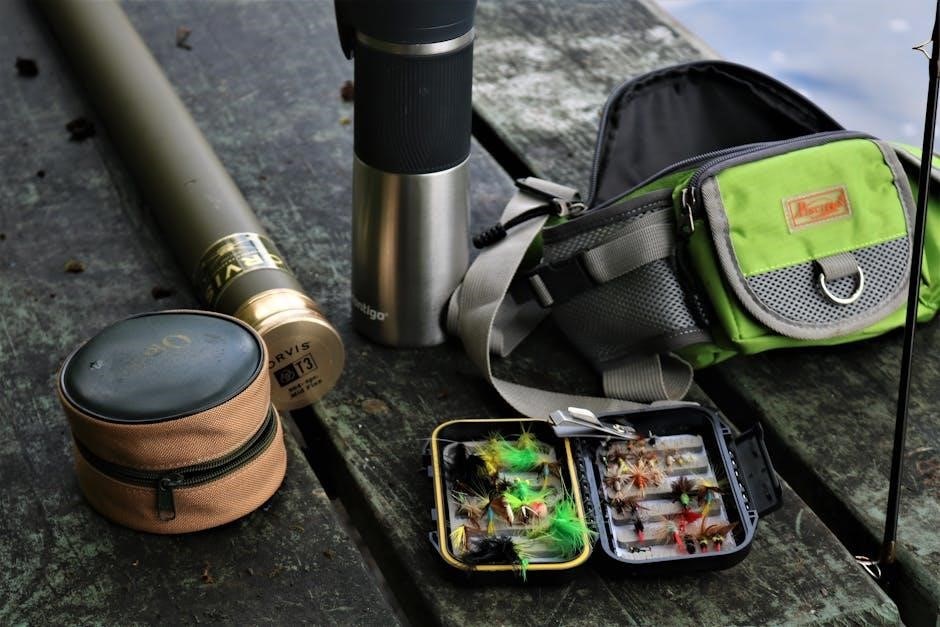
Fuji and REC are leading manufacturers, providing detailed charts outlining guide sizes correlated to rod weight and line weight, establishing industry benchmarks for performance.

Fuji Guide Size Chart Overview
Fuji, a dominant force in fly rod component manufacturing, employs a numerical system to categorize guide sizes, often referred to as “feet.” This system, detailed in their comprehensive charts, correlates these numbers to inner diameter (ID) and wire diameter. Lower numbers indicate smaller guides, typically used for the tip-top and initial running guides on lighter rods.
As you progress down the rod, towards the stripping guide, the numbers increase, signifying larger guides capable of handling more line. Fuji charts meticulously outline recommended guide size sequences for various rod weights – from delicate 0-weight trout rods to powerful 12-weight saltwater setups. Understanding these charts is crucial for ensuring smooth line flow, minimizing friction, and maximizing casting distance and accuracy. The charts also consider rod action, influencing optimal guide placement and size selection.
REC Guide Size Chart Overview
REC (Reel Equipment Company) provides an alternative, yet comparable, guide sizing system to Fuji. Their charts also utilize numerical designations, but the corresponding inner diameters (ID) and wire diameters differ slightly. REC emphasizes a focus on lightweight components, often utilizing silicon carbide (SiC) rings for reduced friction.
REC’s guide size recommendations are presented in detailed charts, categorized by rod weight and line weight. These charts specify a sequence of guide sizes, starting with the tip-top and extending to the stripping guide. While similar in principle to Fuji’s system, anglers often find subtle differences in performance based on personal preference and specific rod characteristics. Careful consideration of REC’s charts ensures optimal line control and casting efficiency.

Guide Placement and Spacing
Proper guide placement and spacing are crucial for efficient energy transfer, minimizing friction, and maximizing casting distance and accuracy during fly fishing.
Stripping Guide Size and Placement
The stripping guide, the largest and first guide from the reel, manages loose line during retrieves and casts. Its size directly impacts line flow and should be appropriately matched to the rod weight and typical fly line used. Generally, larger rods (8 weight and up) require larger stripping guides to handle heavier lines and faster retrieves.
Placement is also critical; it’s positioned further from the reel seat than running guides. A common rule of thumb suggests a distance roughly equal to the reel seat length. Incorrect stripping guide placement can cause line tangles or unnecessary friction, hindering casting performance and potentially damaging the fly line. Careful consideration ensures smooth operation.
Running Guide Size and Spacing
Running guides, smaller than the stripping guide, control the line’s path along the rod during the cast and retrieve. Their size diminishes progressively towards the tip, minimizing friction and maximizing casting distance. Proper spacing is crucial; guides shouldn’t be too close, causing line slap, or too far apart, leading to poor line control.
Standard spacing calculations often involve a percentage of the rod length, adjusted based on rod action. Faster action rods typically require slightly wider spacing. Consistent, well-placed running guides contribute significantly to a smooth, efficient casting stroke and accurate fly presentation, enhancing the overall fishing experience.

Specific Guide Size Recommendations by Rod Weight
Guide size selection varies significantly with rod weight, influencing casting performance; lighter rods need smaller guides, while heavier rods require larger, more robust options.
0-2 Weight Rods: Guide Size Recommendations
For ultra-light fly rods, typically 0-2 weight, precision is paramount. These rods demand exceptionally small guides to maintain delicate presentation and minimize line friction. Fuji size 6 through 8 guides are commonly recommended for the running guides, ensuring smooth line flow without adding unnecessary weight.
The stripping guide, crucial for retrieving line, should be a Fuji size 8 or 10, providing sufficient capacity for the minimal line volume associated with these lighter weights. Utilizing smaller inner diameter guides prevents line slap and enhances casting accuracy. Careful consideration of guide material, like ceramic, further reduces friction and protects the fly line.
3-5 Weight Rods: Guide Size Recommendations
Versatile 3-5 weight rods, popular for trout and panfish, benefit from a balance between sensitivity and line handling. Fuji guide sizes 8-12 are generally recommended for running guides, offering a smooth transition for standard fly lines. The stripping guide should typically be a Fuji size 10 or 12, accommodating the increased line capacity compared to lighter rods.
Consider using ceramic guides (Alconite or SIC) to minimize friction and enhance casting distance. Proper spacing is crucial; closer spacing improves line control, while wider spacing reduces weight. Matching guide size to line weight ensures optimal performance and prevents potential issues like line slap.
6-8 Weight Rods: Guide Size Recommendations
For 6-8 weight rods, designed for bass, steelhead, and light saltwater species, larger guides are necessary to manage heavier lines and prevent friction. Fuji guide sizes 12-16 are commonly used for running guides, providing ample space for line flow. A Fuji size 16 or 18 stripping guide is ideal, handling the increased line volume during casts and retrieves.
Titanium or ceramic guides are highly recommended due to their durability and reduced friction. Consistent spacing, slightly wider than on lighter rods, maintains line control without adding excessive weight. Accurate guide sizing is vital for maximizing casting distance and minimizing line wear.
9-12 Weight Rods: Guide Size Recommendations
Nine to twelve weight rods, employed for large saltwater fish like tarpon, tuna, and sailfish, demand the most robust guide setups. Fuji sizes 16-20 are standard for running guides, accommodating heavy lines and minimizing line slap. A substantial Fuji size 20 or 25 stripping guide is crucial for managing significant line volumes during powerful casts and fast retrieves.
Ceramic (SIC) guides are strongly advised for their exceptional durability and heat dissipation. Precise spacing is essential, balancing line control with minimizing weight. These larger guides require careful attention to ensure optimal performance under extreme conditions.

Materials Used in Fly Rod Guides
Fly rod guides are commonly constructed from stainless steel, ceramic (like Alconite or SIC), and titanium, each offering varying degrees of durability and performance.
Stainless Steel Guides
Stainless steel guides represent a traditional and cost-effective option for fly rod construction. They offer excellent corrosion resistance, making them suitable for both freshwater and saltwater environments. While durable, stainless steel isn’t as lightweight as other materials like titanium.
Historically, stainless steel was the predominant material used in fly rod guides. Modern stainless steel guides often feature a chrome plating to enhance smoothness and reduce friction on the fly line during casting. However, they lack the exceptionally smooth surface of ceramic guides, potentially leading to increased line wear over time. Despite this, their affordability and robustness continue to make them a popular choice, particularly for beginner or budget-conscious anglers.
Ceramic Guides (Alconite, SIC)
Ceramic guides, specifically those utilizing Alconite and Silicon Carbide (SIC), represent a significant advancement in fly rod guide technology. These materials offer exceptionally smooth surfaces, drastically reducing friction between the fly line and the guide itself. This translates to increased casting distance, improved line control, and minimized line wear.
Alconite is a popular ceramic choice, providing a good balance of performance and cost. SIC is a harder, more durable ceramic, offering even greater smoothness and heat dissipation – beneficial when using monofilament backing. Ceramic guides are generally more expensive than stainless steel, but the performance benefits often justify the investment for serious fly fishers seeking optimal casting efficiency and line protection.
Titanium Guides
Titanium guides represent a premium option in fly rod construction, prized for their exceptional strength-to-weight ratio and corrosion resistance. These guides are significantly lighter than stainless steel, contributing to a more sensitive and responsive rod feel, particularly noticeable during delicate presentations.
Titanium’s inherent resistance to saltwater corrosion makes it ideal for anglers fishing in harsh marine environments. While typically more expensive than stainless steel or even ceramic guides, titanium offers a lifetime of reliable performance. Often paired with ceramic inserts (like SIC) to further reduce friction, titanium guides are a top choice for high-end fly rods designed for demanding conditions and discerning anglers.

Tools for Measuring Guide Size
Digital calipers and specialized guide size gauges are crucial for accurate measurements, ensuring correct component selection during rod building or repair processes.
Digital Calipers
Digital calipers represent a versatile and precise tool for measuring various aspects of fly rod guides. They accurately determine the inner diameter (ID) and wire diameter, critical dimensions for ensuring proper line flow and preventing friction. Unlike traditional calipers, digital versions offer easy-to-read LCD displays, minimizing measurement errors.
When selecting guides, precise ID matching to the fly line’s diameter is paramount. Calipers allow builders to verify guide sizes against manufacturer specifications (like Fuji or REC charts); They also aid in checking for consistent sizing across a set of guides. Furthermore, calipers can measure the foot length of the guide, important for secure wrapping and aesthetic alignment on the rod blank. Investing in a quality digital caliper is a worthwhile expense for any serious rod builder.
Guide Size Gauges
Guide size gauges offer a quick and convenient method for identifying fly rod guide dimensions, particularly useful during the rod building or repair process. These specialized tools feature precisely sized holes corresponding to common guide feet sizes, allowing builders to instantly determine a guide’s size without complex measurements.
While digital calipers provide greater precision, gauges excel in speed and simplicity. They are especially helpful when sorting through large quantities of guides or when working in field conditions. A good gauge set will cover the range of sizes used for various rod weights and line classes. Though less versatile than calipers, guide size gauges remain a valuable addition to any rod builder’s toolkit, streamlining the selection process.

Troubleshooting Guide Size Issues
Incorrect guide sizing often manifests as line slap, excessive noise, or reduced casting distance, signaling a need for reevaluation and potential adjustments.
Line Slap and Noise
Excessive line slap against the rod, accompanied by noticeable noise during casting, frequently indicates a mismatch between the fly line weight and the guide’s inner diameter. Guides that are too large allow the line to whip around freely, creating unwanted sound and energy loss. Conversely, guides that are too small can cause friction, also leading to noise and potentially damaging the fly line over time.
This issue is particularly common when using heavier lines on rods with undersized guides, or lighter lines on rods with oversized guides. Identifying and correcting this imbalance is crucial for a smoother, quieter, and more efficient casting experience, ultimately improving overall fly fishing performance.
Poor Casting Distance
Reduced casting distance is a common symptom of improperly sized fly rod guides. If guides are too small, they create excessive friction against the fly line, hindering its smooth travel and diminishing energy transfer during the cast. Conversely, oversized guides can allow the line to buckle and collapse, reducing efficiency and distance.
The ideal guide size facilitates a controlled release of line energy, maximizing casting distance. Addressing guide size issues, alongside proper casting technique, is vital for achieving optimal performance. A well-matched guide train minimizes friction and maximizes the line’s potential for a longer, more accurate cast.